The difference at a glance
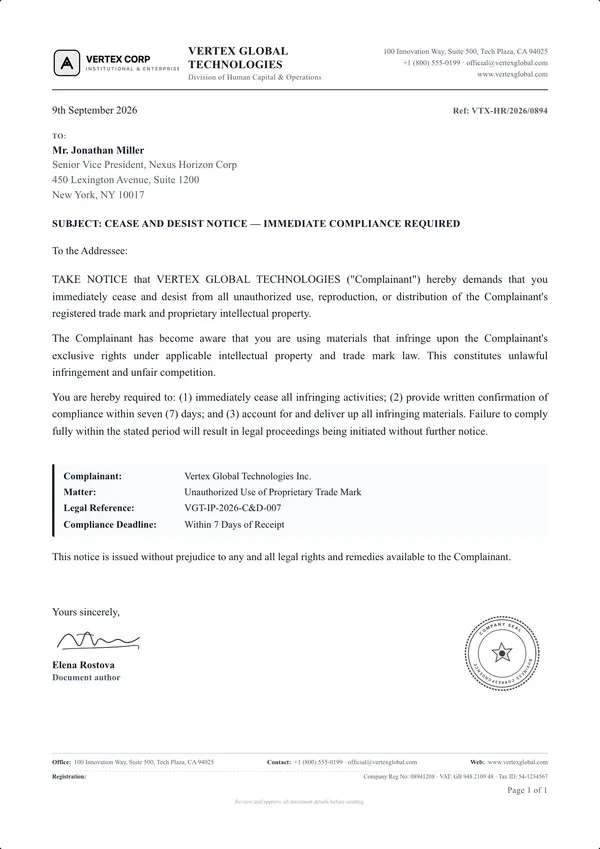
- Cease and desist: "Stop." Used for ongoing behaviour — copying your work, using your trademark, harassment, defamation or breaching a non-compete or NDA.
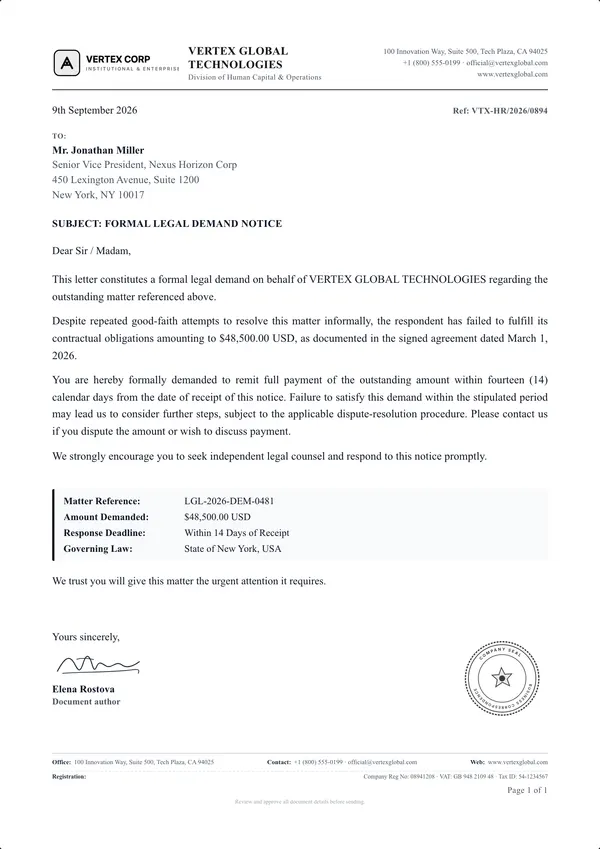
- Demand letter: "Pay or perform." Used to recover money (unpaid invoices, deposits, refunds) or to require an action promised in a contract.
What both should include
- The facts: what happened, when, and supporting evidence you can refer to.
- Why it matters: the right, contract or agreement involved.
- Exactly what you want: stop a specific activity, or pay a specific amount by a specific method.
- A clear deadline — a date rather than "within 14 days".
- What you will do if they don't comply, such as filing a claim.
- Your contact details and signature.
Tip: Stay factual and calm. These letters are often shown to a court later, and a measured tone makes you look reasonable.
Which one should you send?
If the problem is continuing behaviour, send a cease and desist letter. If the problem is money or an unfulfilled obligation, send a demand letter. Some situations need both — for example a former partner who is using your brand and also owes you money — in which case one letter can make both requests.
What happens next
Many disputes end at this stage: the other side stops, pays, or proposes a settlement. If they ignore the letter, you have documented that you gave them a fair chance, which helps if you escalate to mediation, small claims or a lawyer.
Two worked scenarios
Scenario one: a customer has not paid a fictional invoice of USD 800. A payment request should identify the invoice, due date, payments already received and remaining balance. Include a way to raise a dispute. This is a demand for payment; it does not require the recipient to stop an unrelated activity.
Invoice LS-204 dated 1 September 2026 shows USD 800 outstanding after the payment due date of 15 September. Please pay the balance or contact [contact] by [response date] with details of any disputed charge.
Scenario two: another website displays a business's logo without permission. Preserve the URL and dated evidence and check the rights involved before writing. A request to remove the identified logo concerns ongoing conduct. An unpaid invoice or a court filing is a separate matter.
We have identified our logo on [specific URL], captured on [date]. Please remove it from that page and confirm your response by [date]. Contact [contact] if you believe you have permission to use it.
Both examples are fictional. They do not establish liability, ownership or a legal deadline, and should not be used to make allegations you cannot support.
Check the process before escalating
- Check the correct legal party, address and applicable local pre-action procedure.
- Keep the original records, the final letter and proof of delivery together.
- Do not add penalties, legal costs or threats without a basis. If the facts or rights are disputed, obtain local advice before escalating.
- A letter can document a request. It does not grant a right to damages, guarantee a settlement or replace a court order.
Sources and scope
These references support the topics described below. Our worked examples are fictional and are not official forms. Requirements can differ by recipient and jurisdiction.
- California Courts — Small claims plaintiff checklist
California small claims preparation, including a demand before filing. Other locations and dispute types have different procedures; this is not authority for intellectual property claims.
For a correction or a template issue, contact the Letter Studio team. We do not claim legal review or certification of these guides.
This guide is general information, not legal advice. Laws differ between countries and situations — for anything with legal consequences, ask a qualified professional to review your letter.